
Speech and language development varies from child to child, but if you’re wondering whether your child might need extra support, you’re not alone. In this blog, we’re breaking down common questions about speech therapy, including when to seek it out, what sessions may look like, and how it can empower your child to communicate with more confidence, clarity, and connection. Whether your child is just starting to use words or navigating classroom communication, we’re here to support their unique journey.
At what age should a child go to speech therapy?
At Puzzle Pieces, we believe there’s no such thing as “too early” when it comes to supporting communication. Some children benefit from speech and language therapy as toddlers, especially if they aren’t using many words, are hard to understand, or seem frustrated when trying to communicate. Others might not need services until preschool or elementary school, when challenges with social skills, reading, or classroom communication become more apparent. Because we focus on a developmental and family-centered approach, we meet children right where they are, whether they’re 18 months old and just learning to use signs and words, or 10 years old, working on social conversation skills.
What do kids do at speech therapy?
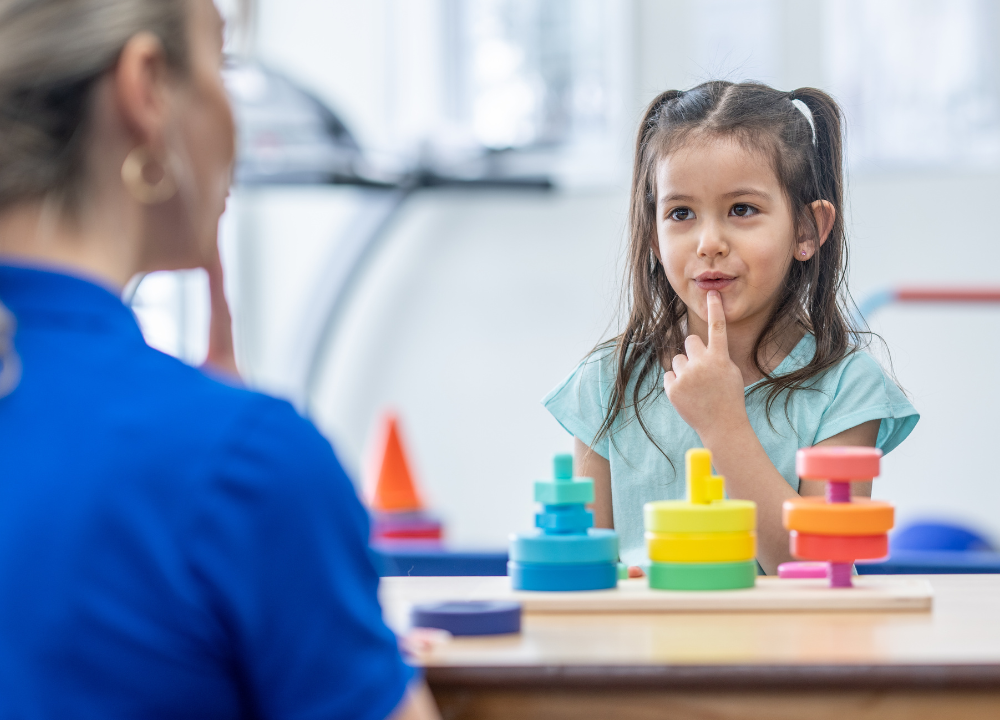
Speech therapy at Puzzle Pieces never looks like a “drill at a desk.” It looks like play, because play is how kids learn best. A session might include building a tower while practicing turn-taking words, playing pretend while working on flexible thinking and problem solving, or creating art while modeling sentence structure. Our therapists weave speech and language goals into activities children enjoy, making therapy engaging and meaningful.
Kids might work on:
- Expanding vocabulary and sentence length
- Improving clarity of speech sounds
- Using AAC (augmentative and alternative communication) tools
- Building social communication and conversation skills
- Developing the language needed for reading and writing
How do I know if my child needs speech and language therapy?
Some signs that your child may benefit from speech and language therapy include:
- They’re not using as many words or sentences as their peers their age.
- You or others have a hard time understanding them.
- They get frustrated when trying to communicate.
- They struggle with following directions, telling stories, or organizing their thoughts.
- They avoid social interactions or have difficulty connecting with peers.
- Teachers express concerns about communication, reading, or participation in class.
Families often come to us with the simple question: “Is this typical?” Our team can help you figure out whether what you’re seeing is part of natural development or whether extra support could help!
What results can I expect from speech therapy for my child?
Every child’s journey is unique, but families at Puzzle Pieces often see:
- Growth in vocabulary, clarity, and sentence structure.
- Greater confidence in expressing needs, ideas, and feelings.
- Stronger social skills and peer relationships.
- Less frustration at home and school.
- More independence in communication, whether through speech, AAC, or a combination of both.
We don’t promise overnight transformations, but we do promise steady progress, consistent partnership with families, and therapy that celebrates every step forward. Our goal is not just to “fix speech,” but to build your child’s communication skills so they feel understood, confident, and connected.
Contact Puzzle Pieces today to learn more about how speech therapy may benefit your child and your family.