










FAQ
It may be worth considering an AAC evaluation anytime a child’s ability to communicate is not keeping up with what they understand, think, want, or need to express.
Some signs might include frequent frustration related to communication, relying heavily on adults to interpret what they want, having a limited number of spoken words, difficulty communicating beyond basic wants and needs, or being much more successful communicating in some situations than others.
A child does not need to “fail” speech therapy before exploring AAC. If we’re wondering whether additional communication tools could make life easier and give a child more ways to express themselves, that’s enough reason to explore it.
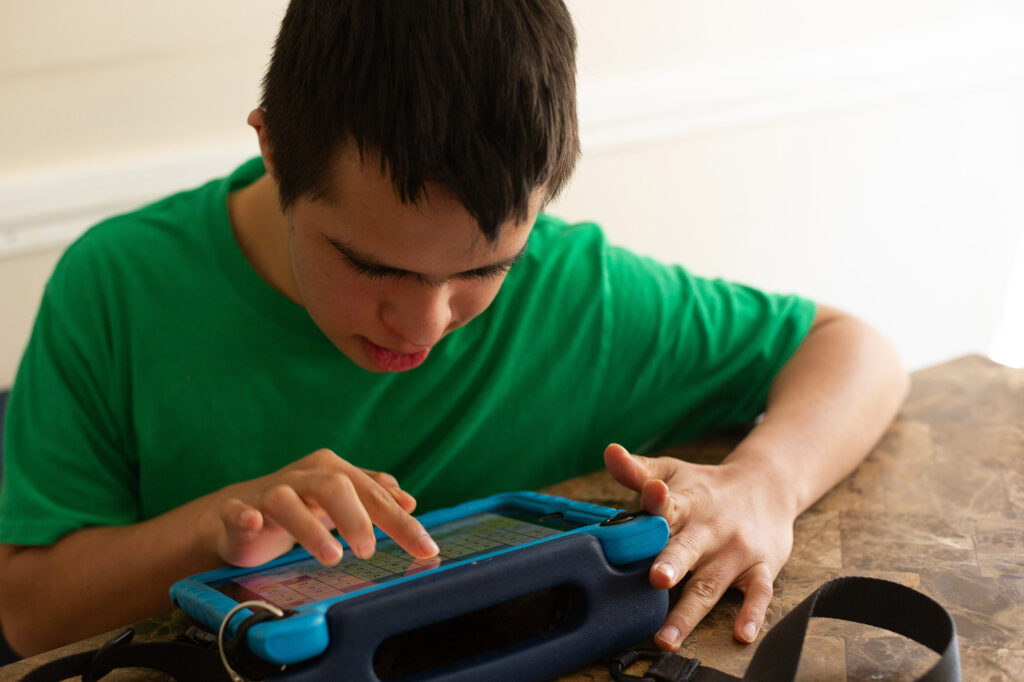
There is not one “best” AAC device for every child. The best system is the one that gives that particular child meaningful access to communication.
We consider factors such as the child’s language abilities, motor skills, vision, sensory needs, attention, access method, communication environments, and how easily the system can grow with them over time. A communication system needs to work at home, school, therapy, in the community, and with the important people in that child’s world.
AAC does not prevent the development of spoken language. In fact, research has found that AAC interventions can support communication and may also support spoken language development for some children.
Most importantly, we don’t want a child to have to wait for speech to develop before they have access to robust communication. Communication is the goal, not speech at all costs.
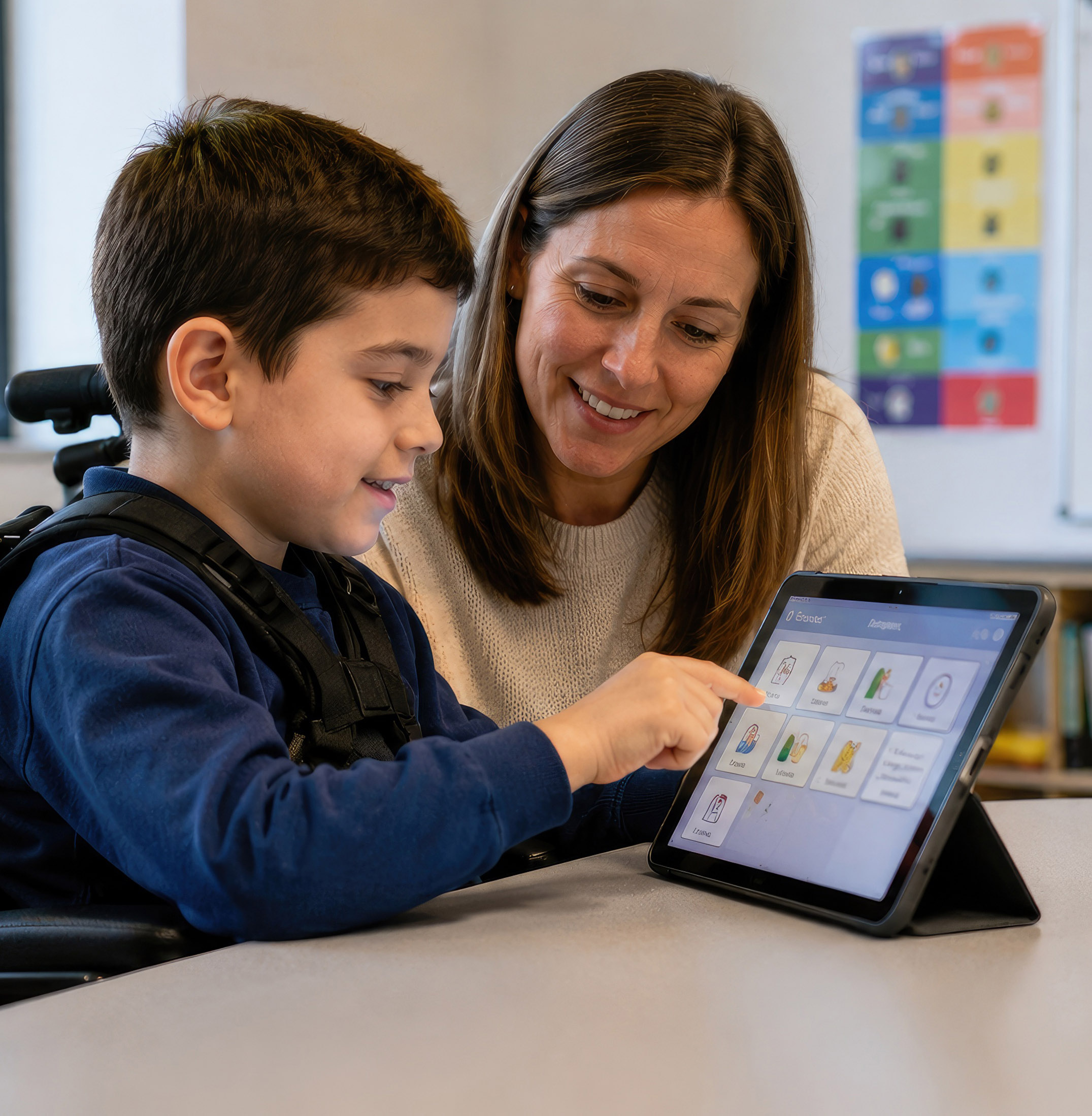
Children learn communication by communication. We help children use AAC during meaningful interactions like playing, requesting help, protesting, being silly, sharing interests, commenting, asking questions, telling someone what happened, and connecting with other people.
We also model AAC ourselves because just as children learning spoken language hear adults speak long before they’re expected to use all those words themselves, children learning AAC benefit from seeing other people communicate using their system.
We frequently hear from families who have been told AAC evaluations have extremely long waitlists, but you may not have to wait. If you are concerned that your child does not currently have reliable access to communication, we encourage you to reach out. Availability changes, but our goal is to get children evaluated and connected with appropriate supports as quickly as we reasonably can.
For many families, the process can move very quickly. Following the initial evaluation and benefits check, a device can often be in your child’s hands before their next therapy session. The benefits check typically takes about a day, and once we collaboratively decide to move forward, AbleNet ships the device immediately. Depending on your insurance coverage and funding process, the device may be shipped directly to your home or to the Puzzle Pieces clinic.
Puzzle Pieces serves children from toddlerhood through early adolescence. There is no minimum age, diagnosis, or number of spoken words a child needs before AAC can be considered.
Yes! Parents and caregivers are an important part of the AAC process because you know your child best. Our goal is to leave families with a clearer understanding of their child’s communication needs and what tools may help.
Additionally, AAC works best when children have opportunities to see and use their communication system with different people in different places, not just during therapy. We help parents, caregivers, educators, and other providers become comfortable with the system so they can model and create opportunities for authentic communication throughout everyday routines. Consistency across environments can make an enormous difference.